
Foundational Concepts in Life Science
- Structure & Function of DNA–the hereditary blueprint of life
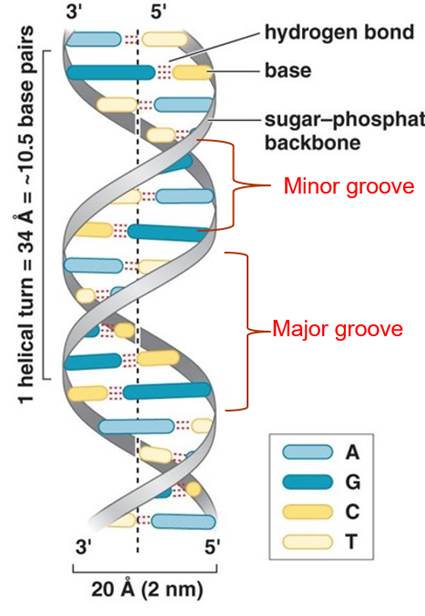
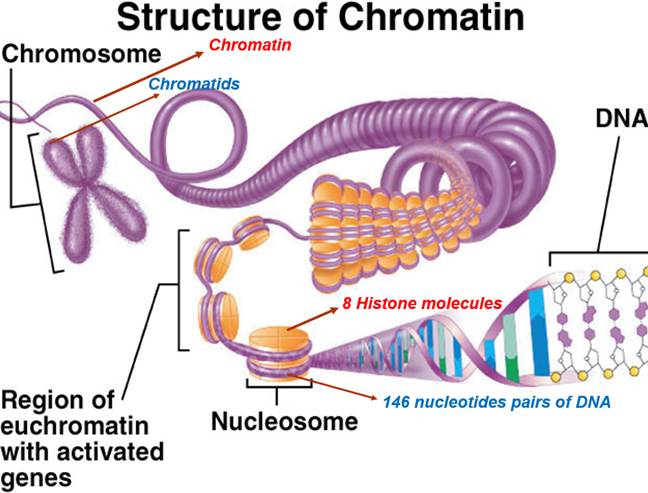
- DNA, the chemically called Deoxyribo Nucleic Acid, is the principal genetic material/instructions (hereditary /genetic blueprint) in all the living organisms, except in certain viruses (called Ribo viruses since they have RNA as their genetic material).
- The DNA is located primarily within the nucleus of the eukaryotic cells and it is the main component of the chromosomes.
- A. Levine explained the chemical composition of DNA. Each DNA molecule is a macromolecule of repeating Deoxyribonucleotide units.
- Each Deoxyribonucleotide consists of three different molecules such as: Phosphate (PO4), five carbon sugar Deoxyribose (C5H12O4) and a Nitrogenous base(Adenine or Purine).
- It has a double-helix structure as described by JD Watson & FHC Crick, consists of two strands wound around each other, connected by base pairs (A-T, C-G), forming a very long ladder like double helix.
- The two ribbon like long strands (back bone of the helix) consists of the sugar, the Phosphate molecule chain, and the purines and pyrimidine bases of the nucleotide inside of the helix project inward from the sugar.
- The purine and pyrimidine of the two strands are held together by weak hydrogen bonds. Such pairs of nitrogenous bases form the rungs, steps, or crossbars of the ladder like DNA chain.
- The two adjacent nucleotides of the two strands form a pair of nucleotides i.e. the two polynucleotide strands is held together by hydrogen bond between specific pairs of purines and pyrimidines.
- The hydrogen bonds between the purines and pyrimidines are very specific. Adenine can bond only to Thymine by two hydrogen bonds(A=T) and Guanine can bond only to Cytosine by three hydrogen bonds(G=C).
- Therefore, the two strand are complementary to each other i.e. sequence of the nucleotide in one chain dictates the sequence of nucleotides in the other.
- The two strands run anti-parallel i.e. in the opposite direction: one strand has the phosphodiester linkage in 3′- 5′ direction and in the complementary strand it is in the reverse order 5′- 3′.
- The width of the DNA double helix is 20A° (2nm) i.e. both polynucleotide strands remain separated by 20A° distance.
- The two chains are coiled plectonemically i.e. coiled around each other in an interlocked way about the same axis to form a twisted double helix.
- The coiling of double helix is right-handed and complete turn occurs every 34A°.
- Since the nucleotides are placed at a distance of 3.4A°(.34nm), ten nucleotides occur in per turn.
- The helix has two external grooves, a deep wide one called ‘Major groove’ and a shallow one called ‘Minor groove’, both of these grooves are large enough to allow protein molecules to come in contact with the bases.
- This model could explain all the characteristic feature of a hereditary material namely replication, mutation, and stability.
DNA Structure
DNA → Double Helix → Nucleotide → Sugar + Phosphate + Base Pair (A-T, C-G)
DNA has two vital functions:
Heterocatalytic function: – The functions of the DNA, which direct the synthesis of chemical molecules other than itself, is called heterocatalytic function.
Eg. Synthesis of RNA, proteins, etc.
Autocatalytic function: – The function of DNA, which directs the synthesis of the DNA itself (Replication), is called autocatalytic function. Eg: DNA replication
🔍 Key Learning Points:
✔ Nucleotides are the building blocks of DNA.
✔ It has a double helix structure.
✔ Base-pairing rules maintain genetic stability.
✔ DNA replication is essential for cell division.
🧬 Real-Life Application:
– DNA sequencing is used in forensics, medicine, and ancestry tracing.
– Genetic engineering modifies DNA for gene therapy and GMOs .
2️. Mechanism of Photosynthesis
Photosynthesis is the photochemical process by which plants convert sunlight into chemical energy in the food (Carbohydrate/Glucose) utilizing CO2 and Water with in the chlorophyllated cells.
The mechanism of Photosynthesis involves the following step-by-step processes:
1. Light Phase: Light-dependent reaction (occurs in thylakoids) → Produces ATP and oxygen.
2. Dark Phase: Calvin Cycle (light-independent) → Uses ATP to convert CO₂ into glucose.

🔍 Key Learning Points:
✔ Chlorophyll absorbs sunlight to start photosynthesis.
✔ ATP & NADPH provide energy for sugar formation.
✔ Carbon fixation converts inorganic CO₂ into organic compounds.
🌍 Real-Life Application:
Photosynthesis supports food production and oxygen generation in the biosphere.
It plays an important role in the biogeochemical cycling of minerals and water cycle.
Artificial photosynthesis research can help generate renewable energy.
3️. Differences Between Prokaryotic & Eukaryotic Cells
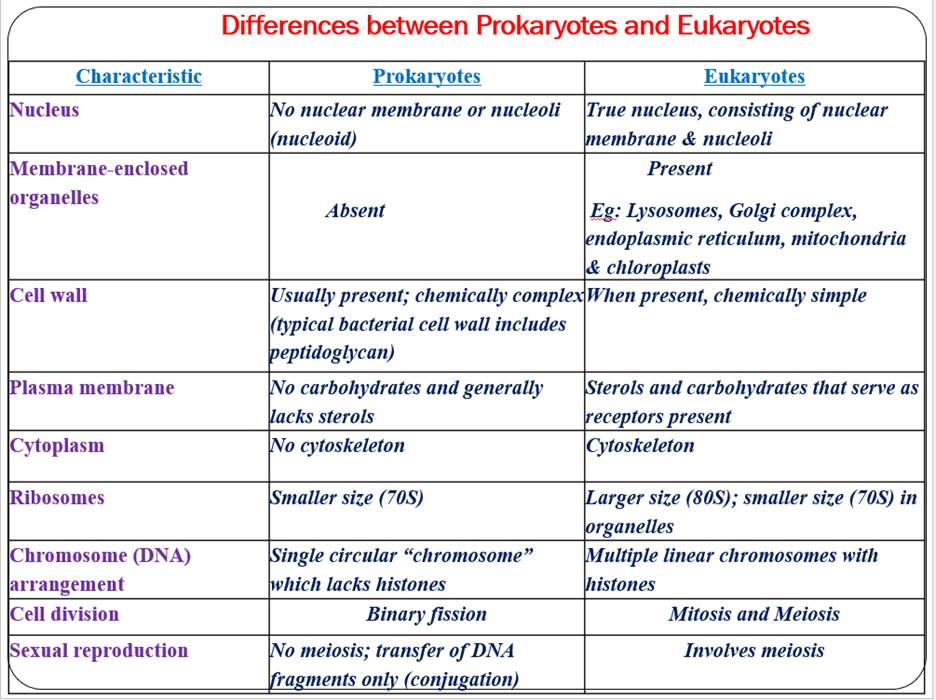
Cells/organisms are classified into prokaryotic (simple) and eukaryotic (complex) based on their structure.
🔍 Key Learning Points:
✔ Prokaryotes lack membrane-bound organelles.
✔ Eukaryotic cells have specialized organelles for complex functions.
🔬 Real-Life Application:
– Studying prokaryotes helps in antibiotic development.
– Eukaryotic cell research aids in diagnosis and treatment of diseases.
4️. Cell Cycle & Its Significance
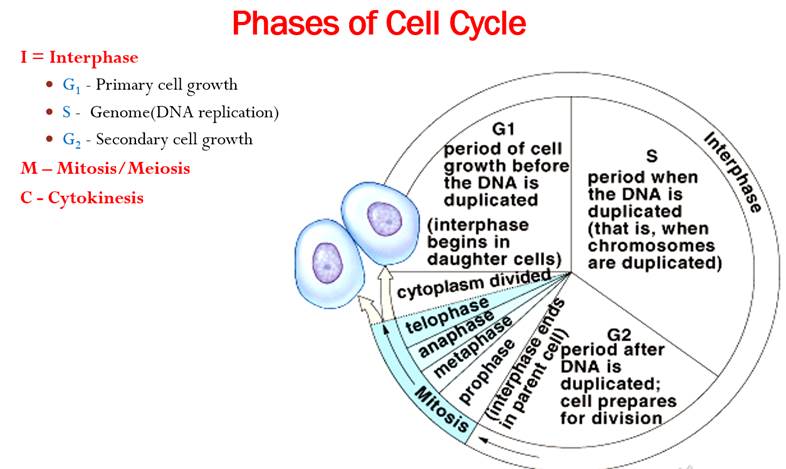
The cell cycle regulates how cells grow and divide. The cell cycle is the sequence of events that occur between one division and the next.
It consists of three main stages: Interphase, Nuclear division (Mitosis) and finally Cytoplasmic division (also called Cytokinesis).
Cell cycle consists of:
1. Interphase (G1, S, G2) – Cell grows and DNA replicates.
2. Mitosis (PMAT) – Nuclear division for body cell replication.
3. Cytokinesis – Cell splits into two daughter cells by the division of cytoplasm.
🔹 Concept Map:
Cell Cycle → Interphase → Mitosis/Meiosis → Cytokinesis
🔍 Key Learning Points:
✔ Ensures growth, repair, and reproduction.
✔ DNA replication in S-phase is crucial for genetic stability.
🔬 Real-Life Application:
Failure of cell cycle regulation leads to malignant growth (Tumour/Cancer).
Treatment of diseases.
5️. Mitosis vs. Meiosis
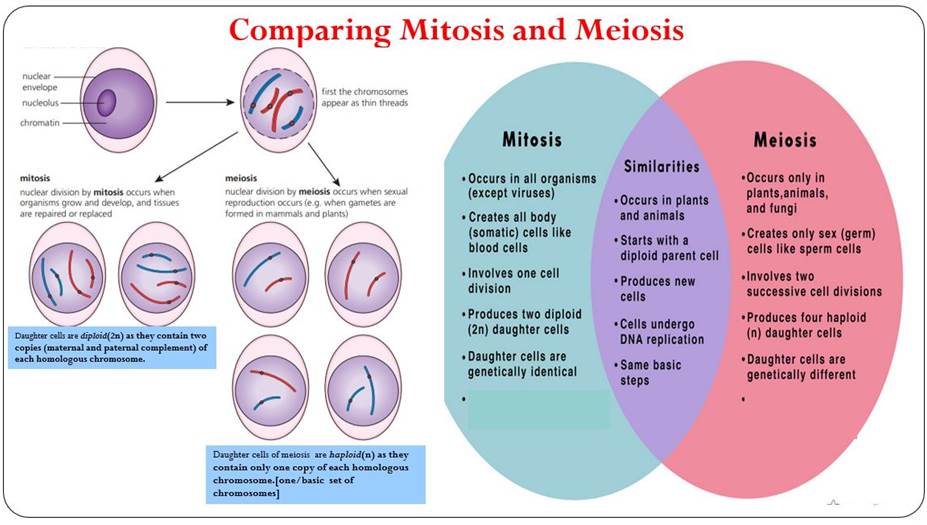
Mitosis creates identical body[somatic] cells, while Meiosis produces gametes (sperm/egg).
Mitosis is described as Equational/Somatic division whereas Meiosis is called Reduction/Germinal division.
6️. Enzymes & their role
Enzymes are modified proteins which act as biological catalysts by regulating biochemical (metabolic) reactions.
The mechanism of enzyme action is explained by the lock-and-key model, where the substrate[key] binds to the active site of the enzyme [Lock].
An Enzyme-substrate complex forms when an enzyme combines with its substrate.

🔹 Concept Map:
Substrate +Enzyme → Active Site → Enzyme-Substrate → Products + Enzyme

🔍 Key Learning Points:
✔Factors affecting enzyme activity- Enzyme concentration, Substrate concentration, Temperature, pH affect enzyme activity and presence of inhibitors.
✔ Without enzymes, metabolic reactions would not take place.
🔬 Real-Life Application:
- Digestive enzymes break down complex molecules (Eg: food).
- Enzymes are used in cleaning agents such as detergents.
7️. Plasma Membrane Structure & Function
The plasma membrane controls the passage of materials into and out of cells. It’s made of a phospholipid bilayer, proteins, and carbohydrates.
The phospholipids & proteins in a cell membrane can drift or move side to side making the membrane appear “fluid”.
“Protein icebergs in the sea of lipids”The proteins embedded in the lipid bilayer of the cell membrane form patterns or mosaics.Because the membrane is fluid with a pattern or mosaic of proteins, the modern view of the cell membrane is called the fluid mosaic model.

Phospholipids → Hydrophilic Head | H…
Phospholipids → Hydrophilic Head | Hydrophobic Tail
🔬 Real-Life Application:
– Drug delivery systems use membrane transport principles.
8. Macromolecules & Their Role in Cells
The four main macromolecules are:
✔ Carbohydrates – Energy (glucose).
✔ Proteins – Structure & enzymes.
✔ Lipids – Storage & membranes.
✔ Nucleic Acids – DNA & RNA (genetic info).
🔹 Concept Map:
Macromolecules → Carbohydrates | Proteins | Lipids | Nucleic Acids
🔬 Real-Life Application:
– Understanding macromolecules aids in nutrition science & medicine.
9.Central Dogma of Molecular Biology
Central dogma refers to the sequence of events in which the genetic information stored in DNA, is first transcribed into messenger RNA (mRNA), and then translated to produce proteins, which carry out cellular functions.
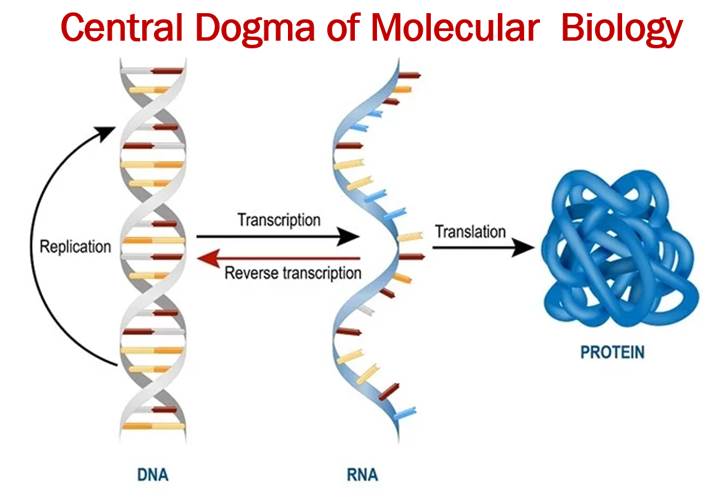
The central dogma explains genetic information flow:
✔ DNA RNA → Protein (Replication → Transcription → Translation).
🔬 Real-Life Application:
– Gene therapy modifies DNA to correct genetic disorders.
- 10.Protein Structure & Function
Proteins have four levels of structure:
✔ Primary – Sequence of Amino acids
✔ Secondary – Folding into helices/sheets.
✔ Tertiary – 3D shape for function.
✔ Quaternary – Multiple proteins interacting.
Application of Proteins:
- Therapeutic Proteins:
Insulin: Regulates blood sugar; used in diabetes treatment.
Monoclonal antibodies: Used in cancer, autoimmune diseases (e.g., Humira).
Growth hormones and clotting factors: For genetic disorders like hemophilia.
Vaccines: Protein subunits (e.g., Hepatitis B vaccine uses recombinant surface antigen).
- 2.Diagnostics:
ELISA tests use antigen-antibody interactions (e.g., HIV test, COVID-19 test).
3.Structural Proteins
Examples:
Collagen: Used in cosmetics and wound healing; also in biomedical scaffolds.
Keratin: Used in hair treatments and beauty products.
Silk and spider silk: Strong fibers for sutures and possible use in bulletproof vests.
- 4.Recombinant Protein Production:
Producing human proteins (e.g., insulin,) in bacteria or yeast.
Synthetic biology: Designing new proteins for specific tasks (biosensors, nanomachines).
- 5.Nutritional and Dietary Supplements
Protein powders and bars: Whey, soy, and casein for athletes and clinical nutrition.
– Fortified foods: Enriching with essential amino acids.
6.Agricultural and Environmental Use
BT Toxins (Protein-based): Used in genetically modified crops to kill pests.
Bioremediation:Removal of pollutants from the environment using living organisms (microbes,plants,etc). Enzymes formed from proteins help break down pollutants in soil and water.
7. Research and Laboratory Applications
Protein markers: GFP (green fluorescent protein) used to track gene expression.
Western blotting and immunohistochemistry: Detect specific proteins in samples.

 Explore the World of Life Sciences