
– area specific comprehensive revision notes for winning the exam!
Area 1 Human cells
1.1 Division and differentiation of human cells
1.2 Structure and replication of DNA
1.3 Gene expression
1.4 Mutations
1.5 Human genomics
1.6 Metabolic pathways
1.7 Cellular respiration
1.8 Energy systems in muscle cells
🔬 Area 1: Human Cells
1.1 Division and Differentiation of Human Cells
✔ Cell Division:
– Mitosis: Produces two identical daughter cells for growth and repair.
– Meiosis: Produces gametes with half the chromosome number.
– Amitosis: Direct division of cell without the formation of spindle as in prokaryotes.
✔ Cell Differentiation:
– Process by which cells get structurally modified for their functions by expressing specific genes.
– Stem Cells: Unspecialized cells capable of division,differentiation and development into any type of cells in the body.
Types of Stem Cells:
– Embryonic Stem Cells: Pluripotent, can become any cell type.
The stem cells produced by reprogramming mature human adult cells are called induced pluripotent stem cells(iPSCs).
-Tissue [Non-embryonic(Somatic/Adult)] Stem Cells: Found in bone marrow, limited differentiation.They can develop into specialized cells of that tissue in which they exist.They remain quiescent(non dividing),until they are activated by a normal need for for more cells.
Learning points:
- Cells in the human body could be of either Somatic (body) cells and Germline(reproductive) cells.
- A somatic cell is any cell in the body other than cells involved in reproduction.
- Somatic cells are diploid(2n) cells and contain two sets of homologous chromosomes.
- Diploid cells in humans have 23 homologous chromosomes.
- Somatic stem cells divide by mitosis to form more somatic cells.
- Germline cells are gametes (sperm and ova) formed by the meiotic division of (germ/ stem) cells.
- Germline stem cells divide by mitosis and by meiosis.
- They undergo mitosis to produce more germline cells or by meiosis to produce haploid(n) gametes.
- The nucleus of a germline stem cell can divide by meiosis. It undergoes two divisions, firstly separating homologous pairs of chromosomes and secondly separating pairs of chromatids.
- Haploid gametes in humans contain 23 single chromosomes.
- Cellular differentiation is the process by which a cell expresses certain genes to produce proteins characteristic for that type of cell.
- Cellular differentiation allows a cell to carry out specialized functions.
- Stem cells are unspecialized somatic cells that can divide to make copies of themselves (self-renew)and to make cells that differentiate into specialized cells of one or more types.
- Embryonic stem cells and tissue stem cells are the two types of stem cells in mammals.
- Cells in the very early embryo can differentiate into all the cell types that make up the individual and are called pluripotent stem cells.
- All the genes in embryonic stem cells can be switched on so these cells can differentiate into any type of cell.
- Tissue stem cells are involved in the growth, repair and renewal of the cells found in that tissue.
- Tissue stem cells are multipotent stem cells as they can differentiate into all of the types of cell found in a particular tissue type. For example, blood stem cells located in bone marrow can give rise to red blood cells, platelets, phagocytes and lymphocytes.
- Stem cells have both therapeutic use and research uses.
- Therapeutic uses of stem cells involve the repair of damaged or diseased organs or tissues.
- They are used in corneal repair and the regeneration of damaged skin.
- The stem cells of the early embryo can be cultured in the laboratory to self-renew and provide a supply of embryonic stem cells.
- Research uses involves the use of stem cells as model cells to study how diseases develop and for drug testing.
1.2 Structure and Replication of DNA
✔ Structure of DNA:
- – Double helix composed of nucleotide.Each nucleotide is a composite of a sugar, phosphate and base.
- – Bases: A-T, C-G, held together by hydrogen bonds.
✔ DNA Replication:

Roles of Enzymes involved in DNA Replication:
– Helicase unzips the DNA strands.
– DNA Polymerase adds complementary nucleotides.
– Ligase joins fragments on the lagging strand.
Semi-Conservative Replication: Each of the two new copies of DNA formed, contains one original strand and one new strand.
1.3 Gene Expression
- ✔ Transcription:
– DNA sequence is copied into mRNA.
– Occurs in the nucleus.
- ✔ Translation:
– mRNA is read by ribosomes to produce proteins.
– Occurs in the cytoplasm.
- ✔ Regulation of Gene Expression:
– Promoters & Enhancers: Control gene activation.
– Epigenetics: Changes in gene expression without altering DNA sequence.
1.4 Mutations
- ✔ Types of Mutations:
– Point Mutation: Single base change.
– Frameshift Mutation: Insertion/deletion altering reading frame.
– Chromosomal Mutations: Large-scale DNA alterations.
✔ Effects of Mutations:
– Harmful: Causes genetic disorders (e.g., cystic fibrosis).
– Neutral: No significant effect.
– Beneficial: Provides evolutionary advantages.
1.5 Human Genomics
✔ Genome Sequencing:
– Identifies the entire DNA sequence of an organism.
✔ Applications of Genomics:
– Personalized Medicine: Tailoring treatments based on genetic profiles.
– Gene Therapy: Correcting faulty genes.
1.6 Metabolic Pathways
✔ Metabolism:
– All chemical reactions in living organisms.
✔ Types of Metabolic Pathways:
– Anabolic: Builds complex molecules (e.g., protein synthesis).
– Catabolic: Breaks down molecules for energy (e.g., digestion).
1.7 Cellular Respiration
✔ Stages of Respiration:
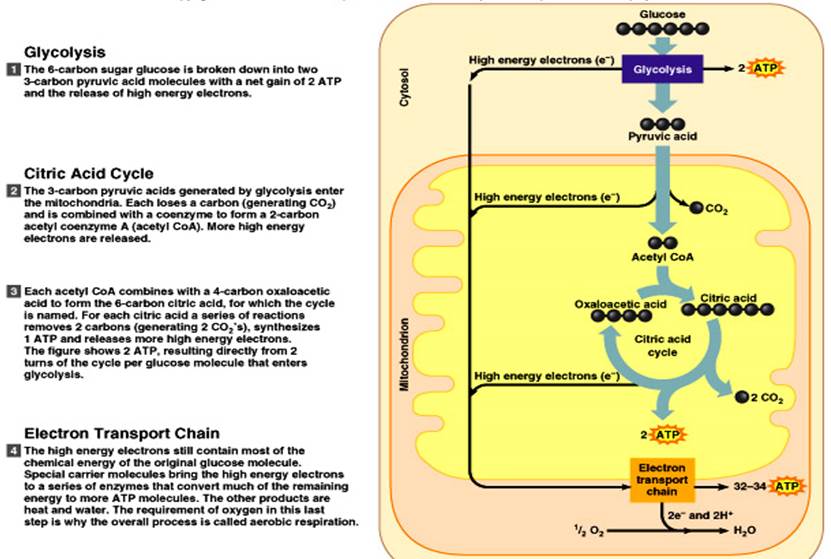
– Glycolysis: Occurs in cytoplasm, produces 2 ATP.
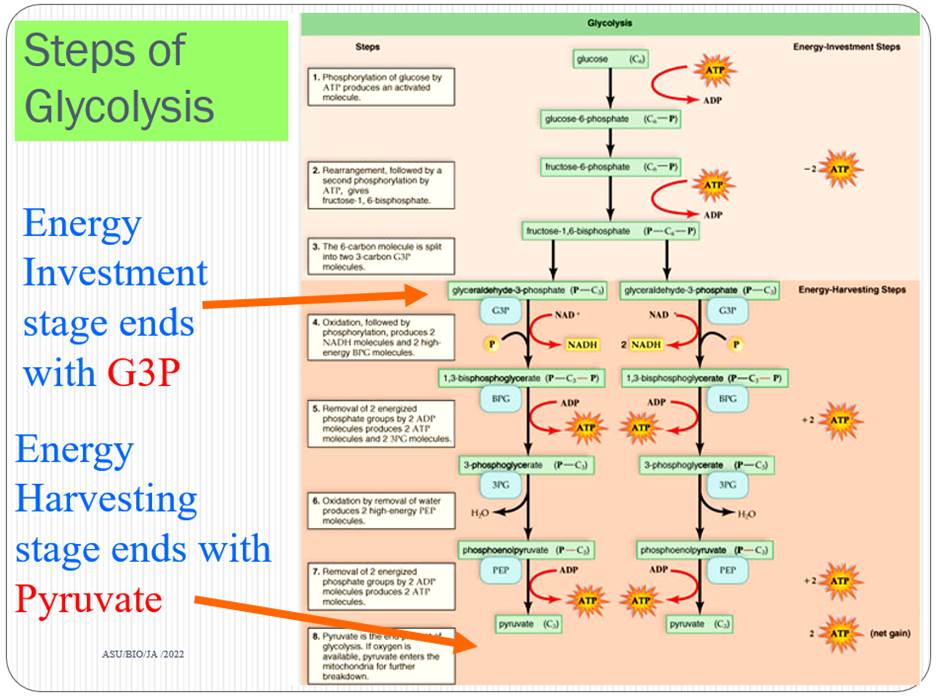
– Krebs Cycle: Occurs in mitochondria, releases CO₂ and generates high-energy molecules.

– Electron Transport Chain: Uses oxygen to produce large amounts of ATP.
1.8 Energy Systems in Muscle Cells
✔ ATP and Energy Transfer:
– ATP = immediate energy source.
✔ Anaerobic vs. Aerobic Respiration:
– Aerobic: Requires oxygen, efficient ATP production.
– Anaerobic: Occurs without oxygen, leads to lactate build-up.


 Explore the World of Life Sciences