
Unique features of Human body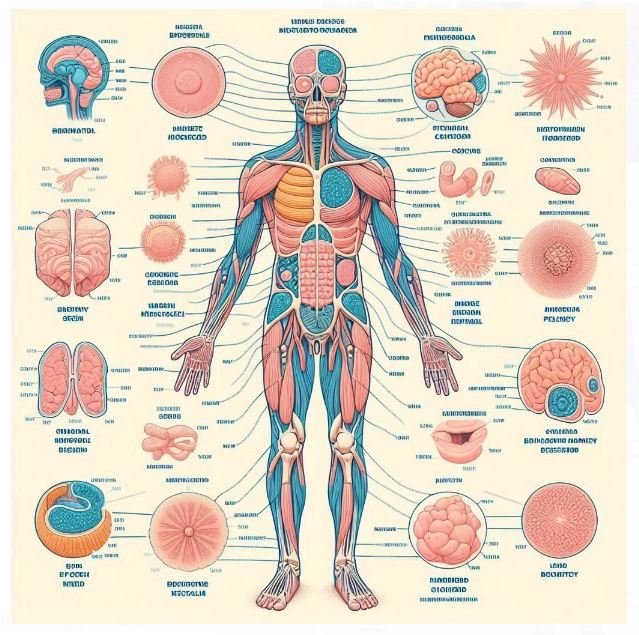
- Bipedalism:
Humans are among the few species that walk upright on two legs. This bipedality allows for a wide range of mobility and frees the hands for tool use and manipulation. - Increased Cranial Capacity with Highly Developed Brain:
Humans have a large brain relative to body size, which accounts for complex cognitive functions such as reasoning, problem-solving, and language. The human brain has a high level of folding, increasing its surface area and capacity for processing information. - Opposable Thumbs:
The human hand has an opposable thumb, allowing for a precision grip and the ability to manipulate objects with remarkable dexterity. This feature is crucial for tool use and skillful tasks. - Complex Linguistic Ability:
Humans possess an advanced capacity for language and communication, enabling complex social interactions and the sharing of knowledge across generations. - Social behavior:
Humans are inherently social beings, forming intricate societies with diverse cultural practices, norms, and systems of governance. Social bonding is a key aspect of human behavior. - Adaptability:
The human body has a remarkable ability to adapt to different environments and challenges. This plasticity can be seen in physiological changes due to altitude, climate, diet, and exercise. - Unique Skin Characteristics:
Human skin is not only the largest organ of the body but also has unique features such as the ability to produce sweat for thermoregulation and the presence of diverse pigmentation, which provides some protection against UV radiation. - Diverse Hair Characteristics:
Humans exhibit a wide variety of hair types, colors, and textures, influenced by genetics and climate. Hair serves various functions, including protection, warmth, and social signaling. - Immune System Complexity:
The human immune system is highly complex, with the ability to recognize and remember pathogens, leading to adaptive immunity. This system is central to protecting the body from diseases. - Circulatory System:
The human circulatory system is intricate, consisting of a vast network of blood vessels and a powerful heart that circulates blood throughout the body, delivering oxygen and nutrients while removing waste, by the mechanism of double circulation. - Digestive System:
The human digestive system has evolved to process a wide variety of foods, allowing for a diverse diet. The gut microbiome plays a crucial role in digestion, nutrition, and overall health. However, Cellulose cannot be digested by the human digestive system. - Endocrine System:
The human body has a complex endocrine system composed of glands that secrete hormones, regulating various bodily functions, including metabolism, growth, and mood furnishing a mechanism of chemical control and coordination of vital activities.

 Explore the World of Life Sciences